SEO is not magic
Ranking well in search results mostly takes common sense: pages with a clear title, a description, useful content, described images, links that work. The problem is that these details get lost easily when several people manage a site over months.
An audit done like a visitor
Pagick’s audit looks at your site the way a visitor, or a search engine, really receives it, not the way you think you configured it. It walks through the pages and flags what is missing: absent title, overlong description, image without alt text, broken link.
A health score and fixes
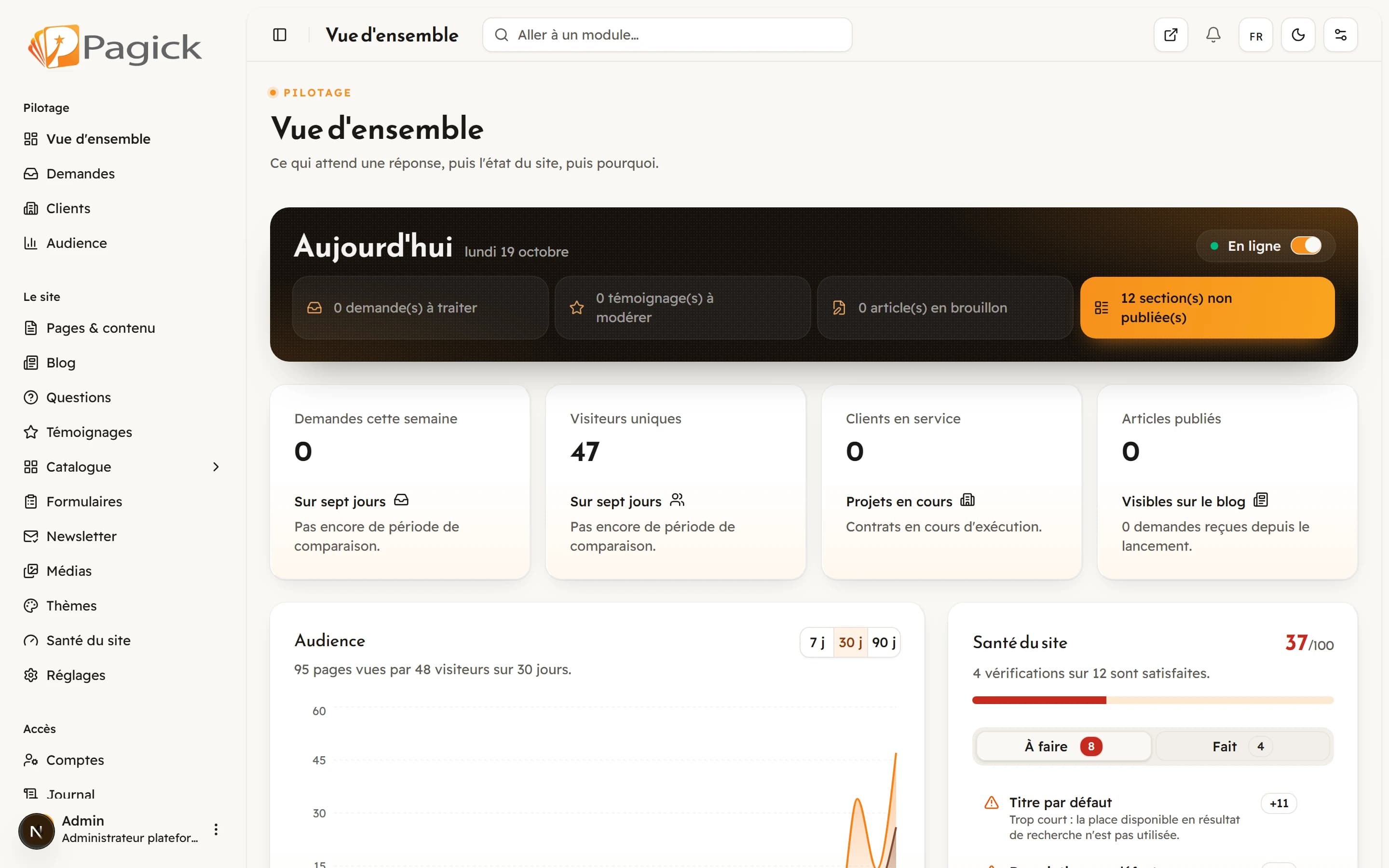
The result is a site health score with concrete, ranked fixes. You do not need to understand technical vocabulary: each item says what is wrong, where, and what to change. You fix, you run it again, you watch the score move.
The technical basics are already there
Pagick produces a sitemap for you, structured data that helps search engines understand your pages, and metadata per page and per language. These are details people forget, or pay a provider dearly for, and here they are built in.
A multilingual site, well indexed
When a site exists in several languages, each version must be linked to its translations so that search engines show the right language to the right visitor. Pagick handles these links, with an address and metadata specific to each language.
Regular audits
Depending on the plan, the full site check is available, and higher plans allow scheduling recurring audits. The point is not to find a problem six months later, but to see it when it appears.
A concrete example
After a month of updates, the audit flags three pages without a description and two images without alt text. You open each page, add a sentence, run the audit again: the score goes up. Ten minutes of work, with no specialist and no hundred-page guide.
Key takeaways
Audit the site as it is served, get a score and clear fixes, have a sitemap, structured data and per-language metadata: SEO becomes a routine, not a project.